New Zealand citizenship is rarely used as a shortcut to Australia according to migration expert
• March 25, 2026
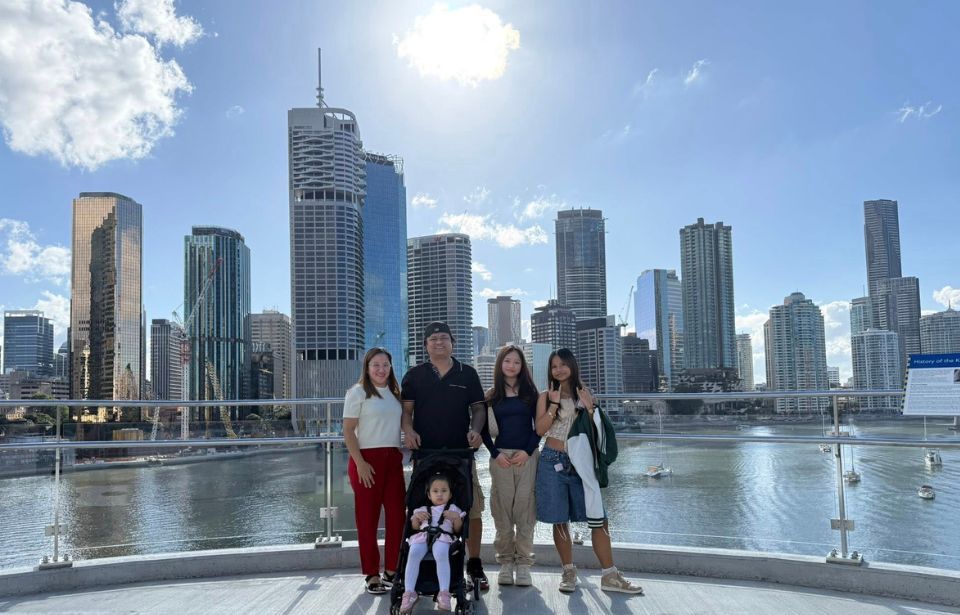
Arman Ramos with his family in Brisbane, Australia. Photo: Supplied
More than 30 per cent of New Zealand citizens born overseas move across the Tasman, but migration expert Francis Collins said the trend is driven by economic opportunities.
He said that obtaining citizenship is a long process, and there is no hard evidence that migrants deliberately wait to become citizens before moving to Australia.
“Many people would come here today, arrive on work visa and student visa only after five years of residence...so people are not becoming citizens until possibly eight to nine years.
“I doubt that people are planning to get citizenship and then move to Australia; it is not as common as it seems to be,” he said.
Under the Trans-Tasman Travel Arrangement, New Zealand and Australian citizens can travel, live, and work in either country without applying for visas.
Collins said the arrangement formalised the ability for both New Zealand and Australian citizens to move between countries, but it goes back to before the Treaty of Waitangi was signed.
“In some ways, the Trans-Tasman travel arrangement formalised that movement and maintained that open border in a way that existed in the prior arrangement.
“So, if you are a citizen, you can hop on a plane and arrive in Australia, and you can start working tomorrow with no need to go through any immigration process,” he said.
Pamela Dagun talks to Francis Collins
The New Zealand Government writes on its website that the Department of Internal Affairs is doing everything it can to speed up the processing of citizenship applications.
This includes changes to staff allocation, increased staff training and technological improvements.
As of March 2, 2026, 90 per cent of applicants were granted citizenship within nine months of submitting their applications, indicating that migrants only have to wait four months for an outcome.
However, Collins said that faster citizenship processing does not encourage migrants to relocate and only shortens their waiting time for a decision.
“[There are] limited opportunities to get ahead to improve their circumstances, to save money, to buy a house and whether those opportunities are better or not in Australia...it varies case by case,” he said.
42-year-old Filipino Arman Ramos, who obtained New Zealand Citizenship in 2023, moved to Brisbane last year for better work opportunities.
“I lived and worked in New Zealand for nine years. I love the country and the culture; my kids also loved it there, but I wanted to support my family better, and Australia gave me that opportunity,” he said.
Ramos said many migrants like him will continue to weigh their options when deciding to move to other countries.
Our journalists sometimes use AI tools which are checked by humans for accuracy.
AI was used to transcribe audio from the interview.


Entrepreneurial platform for migrant women hopes to help change negative narratives
Keesha Levesque • June 8, 2026
Entrepreneurial platform for migrant women hopes to help change negative narratives
Keesha Levesque • June 8, 2026