Like a second job: Living with diabetes through a Māori lens
• May 6, 2026
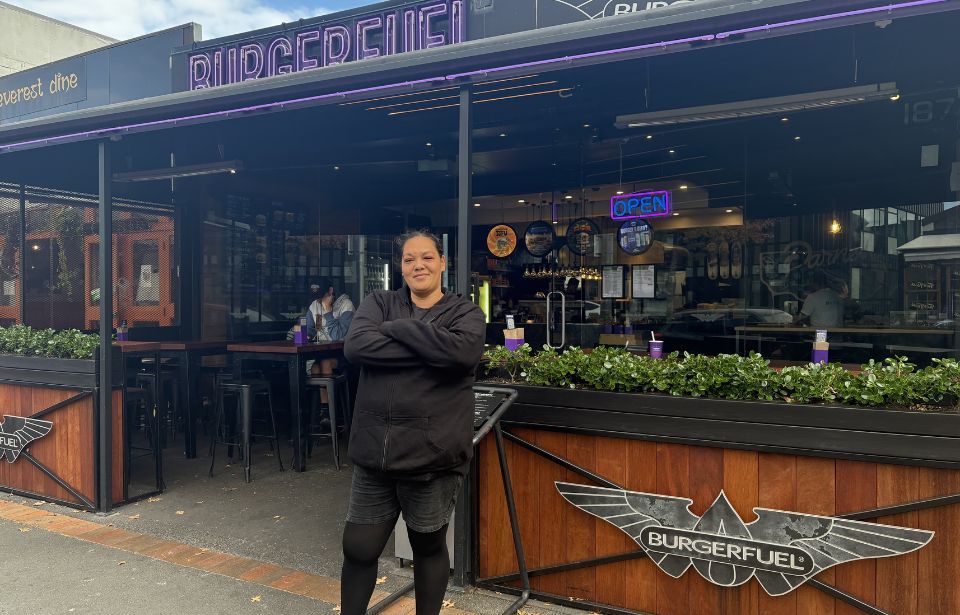
Type One Diabetes Patient Gabrielle Tamepo-Hunt says managing her condition is like a second job. Photo: Maddy Parnwell
A Bay of Plenty woman who was diagnosed with type-1 diabetes says living with the disease is “ike having a second full-time job, as Māori continue to face higher rates of diabetes across Aotearoa.
Prevalence of diabetes for Māori is around three times higher than for non-Māori, and Māori are more likely to develop the condition at a younger age.
Gabrielle Tamepo-Hunt was diagnosed in 2019 after experiencing rapid weight loss and severe symptoms. She says managing the disease affects her day-to-day life including work, relationships, and mental health.
“It affects me in every single way. It’s like managing another job.”
Tamepo-Hunt was admitted to hospital after blood tests indicated she was diabetic and began insulin treatment the same day.
“It was really scary,” she says.
Before being diagnosed, she experienced symptoms such as constant thirst, frequent urination, extreme hunger, and significant weight loss.
Tamepo-Hunt now uses an insulin pump and glucose monitor, saying the technology helps but she still struggles with the daily decision-making that comes with living with the disease.
“The biggest challenge is having to eat all the time,” she says. “The pump gives me insulin automatically so if I’m not hungry, I still have to eat.”
Her physically demanding job in hospitality adds further stress, requiring her to constantly adjust her food intake depending on her activity levels.
“It just depends on the day. If I am busy, I need more food. If it is slow, I don’t.”
Type-2 diabetes is also increasingly being diagnosed in younger populations, including rangatahi Māori.
Health researchers link these inequities to broader structural factors, including the impacts of colonisation, socioeconomic disadvantage, and reduced access to healthcare and healthy food environments.
Tamepo-Hunt says the public’s lack of knowledge around diabetes causes frustration.
“When I tell people I’m diabetic, they assume it’s Type-2,” she says. “But they’re completely different diseases.”
Tamepo-Hunt says she wants to break the stereotype that Māori people have diabetes is because they are overweight and lazy, but that is simply not the case.
She says this lack of awareness can be dangerous, particularly in emergency situations.
“If someone’s having a [hypoglycaemic episode], they can look drunk. But they’re actually in a life-threatening situation. If people knew what to do, they could save a life.”
Managing diabetes requires constant planning, something Tamepo-Hunt says affects her overall wellbeing, or hauora.
“You can’t just be spontaneous,” she says. “Everything has to be planned, what you’re eating, what you’re doing, how your body’s reacting.”
Despite the challenges, she says strong support from whānau, friends, and her workplace has helped her cope with the mental and emotional toll.
“It’s very draining . . . so having that support really helps my mental health.”
Tamepo-Hunt is now calling for greater awareness and education around diabetes, particularly the differences between Type-1 and Type-2, to improve understanding and safety within the community.
Asked what advice she would give someone who was recently diagnosed with diabetes, Tamepo-Hunt says: “Don’t do it alone, It’s hard, but it’s possible.”
-----
Our journalists sometimes use AI tools which are checked by humans for accuracy.
AI was used to help with research.
AI was used to transcribe audio from the interview.

Goldsmith says media council will cope with BSA axing
Eva Perese-Wood; Gaby Lilley; Kyla Blennerhassett; Elena Abbott • May 6, 2026

How Guinness is succeeding in a nation with decreasing beer consumption rates
Erica O'Neill • May 6, 2026
Goldsmith says media council will cope with BSA axing
Eva Perese-Wood; Gaby Lilley; Kyla Blennerhassett; Elena Abbott • May 6, 2026
How Guinness is succeeding in a nation with decreasing beer consumption rates
Erica O'Neill • May 6, 2026