'If they can do it, so can I' - one man's journey in te reo Māori
• May 14, 2026
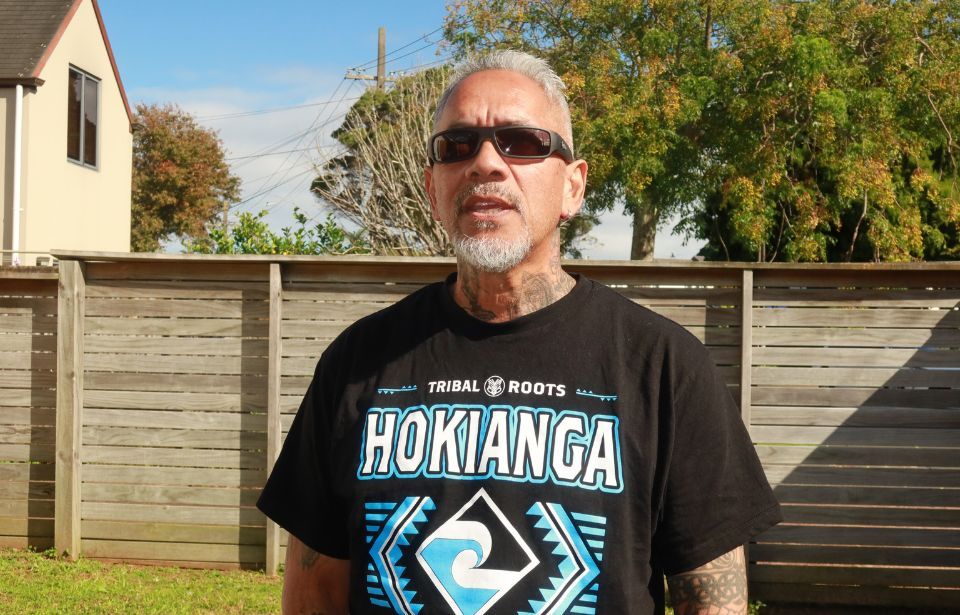
Graham Karanga Puhi, a fluent Te Reo Māori speaker, reflecting on his journey with the language and culture. Photo: Pamela Dagun.
The voice of 59-year-old Graham Karanga Puhi is often what people turn to for karakia before kai or for farewell messages at his workplace.
It's a voice that fills the room with confidence and pride, rooted in te reo Māori.
However, Puhi's journey with te reo did not come easily.
While he was exposed to the language through his parents, who were native speakers, it was not passed down to him to learn.
“It was quite secretly spoken in our house. My parents came from the era of being punished [for speaking it], so they didn't push it on us to speak te reo,” he said.
Instead, his connection to te reo Māori came in other ways, through the people he surrounded himself with, through his involvement in his marae as a kaimahi, and later through art.
Stats NZ research shows that between 2013 and 2023, the number of people learning te reo Māori across Aotearoa grew by 44.11 per cent.
Nevertheless, fluency remains a journey that requires time and commitment.
For Puhi, that journey became a way to reconnect with his identity and express a part of his culture he had always carried with him.
His turning point came in 2009 through whakairo, or traditional carving.
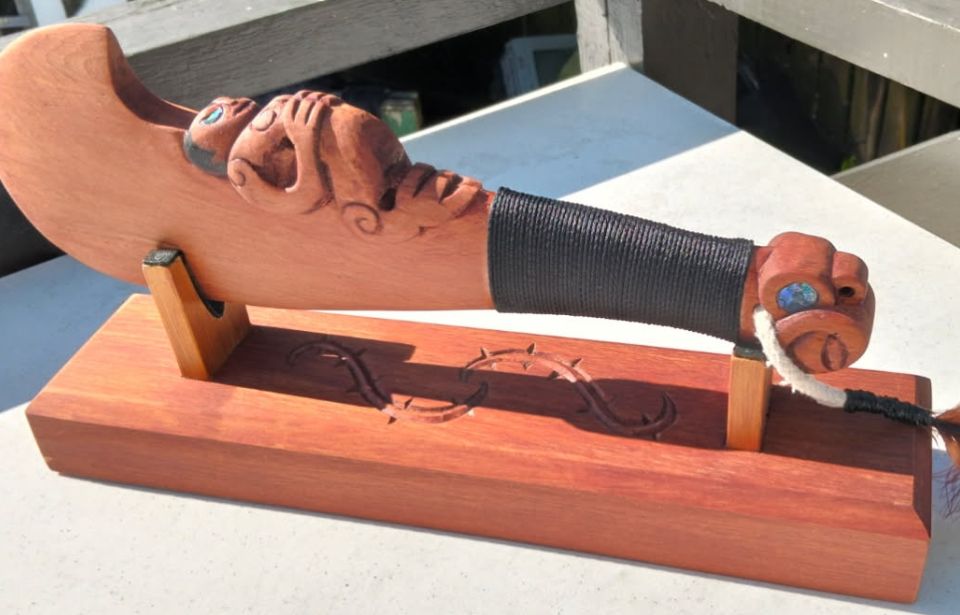
One of Graham’s Karanga Puhi’s commissioned carvings, symbolizing ancestral connection through a tūpuna figure, a personalized grip, and meaningful binding pieces. Photo: Supplied.
As an artist, Graham always wanted to be able to speak te reo Māori to explain the meanings and stories behind every carved piece he made, in the language it belongs to.
He decided to return to school as an adult to learn te reo.
“It sorts of evolved from that,” he told TWN.
However, he said returning to study as an adult was not easy.
It required effort, discipline, and consistency, especially with balancing classes, work, and everyday life expectations.
Puhi said many of the people who wanted to learn the language were also adults, often aged 30 to 40.
“There are a lot of Europeans and other cultures learning te reo Māori in there, and I’ll be honest, they are the ones who really inspired me. If they can do it, so can I,” he said.
Tangaroa Paora, a te reo lecturer and programme leader for Māori media at Auckland University of Technology, said that while te reo Māori was available for anyone to learn, it could not be separated from its cultural and historical foundations.
“We are not just learning a language. It is an indigenous language, and with that comes the history and culture,” he said.
For Puhi, this connection is lived out in his daily life, as he continues to use te reo Māori in casual conversations with friends and attends classes at Te Wānanga o Aotearoa.
“I try to speak it as much as I can, you know, because, like they say, if you don't use it, you lose it,” he said.
As a result, his consistent effort shaped his fluency and strengthened his identity.
“It’s given me confidence now to go ahead and get mataora,” he said, referring to male facial tattoos in te ao Māori.
Paora said reconnecting with te reo Māori was deeply tied to cultural identity and the responsibility of the Māori community.
“Māori who are yet to or at the starting stages of reclaiming their reo can assure themselves that this is a birthright and responsibility to ensure that we uphold the utmost integrity of te reo as it is a foundational aspect of our very ethos and place in this world,” he said.
At his workplace, Puhi says he often finds himself taking on the role of a speaker who leads karakia, or representing others when te reo Māori is needed.
“I’m the only one [at work] who’s a fluent speaker [even though] there’s quite a few Māori there . . . so I can speak on behalf of the ones that can’t,” he said.
Beyond his job, Puhi sees a broader trend at play.
Many people from his generation who grew up with limited access to te reo Māori are returning home and reconnecting with their culture.
“There are a lot of people my age who are all back there, back home.
“They've moved back in the last 10 years from the city, from Australia, wherever, and they're all on the same journey as me,” he said.
Having grown up on the marae, Puhi also understands how language brings people together through stories, protocols, and shared understanding.
“To be able to speak te reo is definitely an advantage.”
He also said that he saw a huge revival not just in the Māori language but in other cultural practices such as moko, waiata, haka, whakairo, whaikōrero and mau rākau.
While he said that these practices di9d not make a person “whole”, he also said they supported his personal development.
In the future, Puhi hopes to see te reo Māori shown in te ao (the world) through people passionate about keeping it alive.
LISTEN: Graham's closing words
Translation:
This is a thank you to you, Pamela, for listening to what I have shared.
That is the end of my speech for now.
Acknowledgements to you all.
Thank you.
-----
Our journalists sometimes use AI tools which are checked by humans for accuracy.
AI was used to help a journalist fluent in Te Reo Māori to translate parts ofthis story.
AI was used to help with research and to transcribe audio from the interviews.
.
Entrepreneurial platform for migrant women hopes to help change negative narratives
Keesha Levesque • June 8, 2026
Entrepreneurial platform for migrant women hopes to help change negative narratives
Keesha Levesque • June 8, 2026