Rise in e-scooter use causing more injuries in CBD
• April 29, 2026
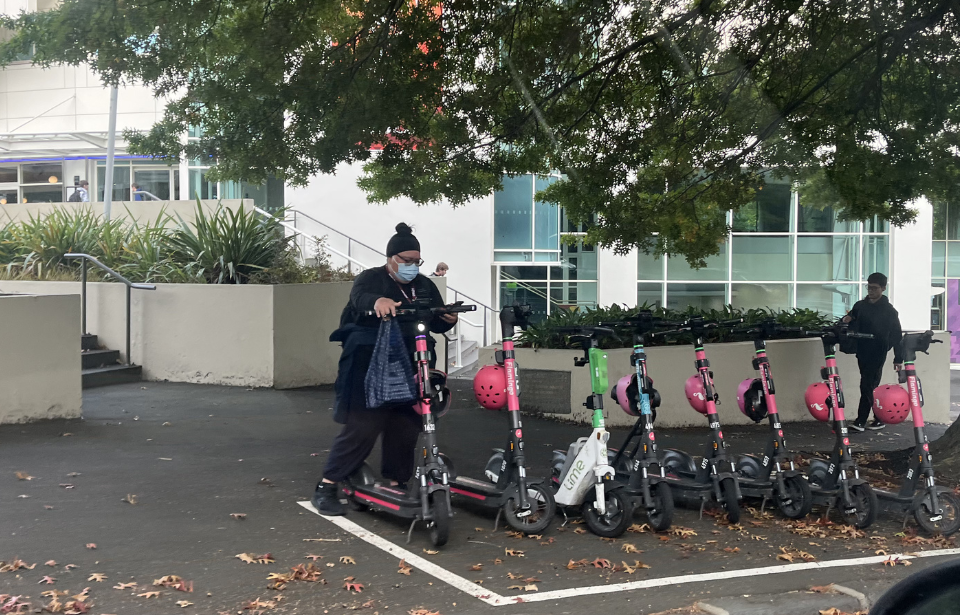
E-scooter popularity has risen since 2020, causing more accidents in the CBD. Photo: Maggie Corbett
ACC reported e-scooter injuries have risen steadily since 2020 as usage increases, according to an NZTA safety review.
In Auckland and across New Zealand, the growth of e-scooters as a transport option has been matched by a rise in accidents and injury claims. The NZTA review found that “from 2020, as e-scooter use has continued to increase, the number of ACC-reported injuries has also increased”, reflecting a direct link between popularity and risk.
Additional ACC data shows the trend continuing in recent years, with thousands of injury claims lodged nationwide and more than 7,000 claims recorded between 2021 and 2023 alone.
Auckland CBD office worker May Kyaw says what began as a routine five-minute walk to work quickly turned into a painful and unexpected accident.
“I was walking to the office around 9:30 in the morning when a girl on an e-scooter came around the corner and hit me.
“We both fell to the ground, and I got bruises on my legs.”
May was left unable to walk properly, forcing her to take two days off work without pay.
She says she believes the crash could have been avoided. She claims the rider was travelling against traffic and cutting through a shortcut rather than following traffic signals.
The incident has significantly changed her perception of e-scooter safety.
Once a casual rider herself, she now believes the current use of scooters, particularly at high speeds in shared zones, is dangerous.
“It’s not safe to ride [at] full speed, especially in the CBD,” she said. “There are too many pedestrians, and even at traffic lights, scooters go past really fast.”
An e-scooter safety review done by NZTA points to an issue of skill with riders using rental e-scooters.
“There is a much higher rate of hospital admission for riders of rental e-scooters than private e-scooters. In part, this reflects the lower level of operational skill and experience of rental users.”
“Depending on what the future potential growth in the e-scooter market is and the number of people new to e-scootering, it could be worth promoting more effective first-time user training sessions to prevent more serious accidents while riding skills are still being acquired.”
These concerns are echoed by Manjot Gill, another local resident who lives and studies in the city center.
She describes a near miss on Queen Street, one of the busiest pedestrian areas in the city.
“Someone on an e-scooter came straight from behind without ringing a bell or anything,” she said. “They weren’t even in the bike lane, just on the main path with heaps of people.”
Manjot says her view of e-scooters has shifted from seeing them as a fun way to travel to viewing them as a growing inconvenience.
“Now it feels like I have to look out for them more than they look out for us,” she said, describing a sense of uncertainty while walking through busy areas.
Both residents point to a broader issue: the design of the CBD itself.
While some infrastructure, such as bike lanes, have been introduced, they argue it is not enough to accommodate both pedestrians and fast-moving e-scooters safely.
“I can see they’ve tried in some places... but it could be better,” Manjot says.
-----
Our journalists sometimes use AI tools which are checked by humans for accuracy.
AI was used to help with research.



Entrepreneurial platform for migrant women hopes to help change negative narratives
Keesha Levesque • June 8, 2026
Entrepreneurial platform for migrant women hopes to help change negative narratives
Keesha Levesque • June 8, 2026