NZ brings in UK experts and AI cameras to tackle yellow-legged hornets on the North Shore
• April 2, 2026
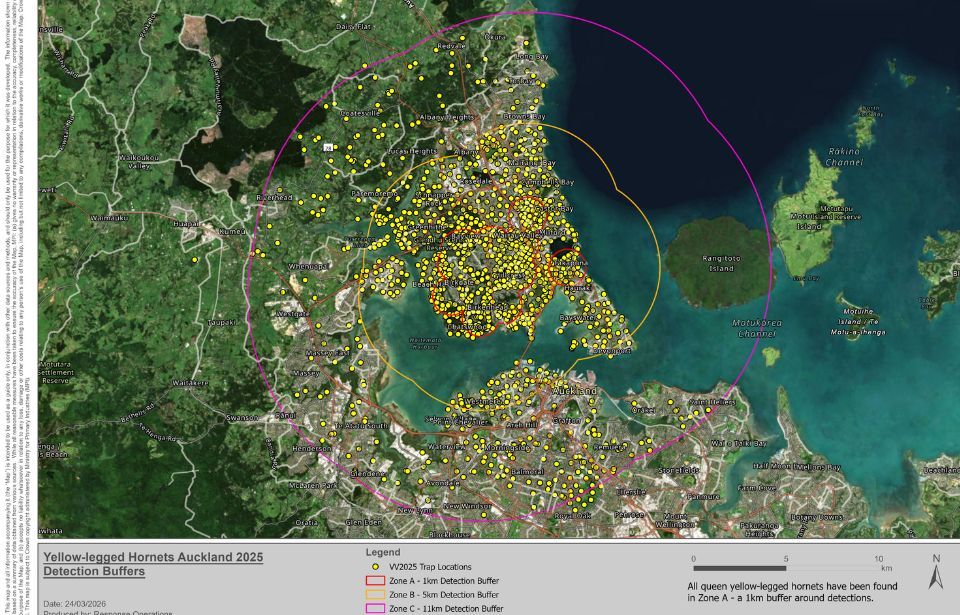
The number of hornet traps and their detection buffers have substantially increased in Auckland. Photo: Supplied
Biosecurity New Zealand has brought in UK experts and new monitoring technology in its fight to eradicate yellow-legged hornets.
It will monitor hornet movements with AI-enabled cameras from the University of Exters Vespa AI team.
Pete Davies, formerly of the UK’s Animal Plant and Health Agency, says New Zealand’s fight against hornets is better resourced than anything he has seen overseas.
He says he is optimistic that hornets can be fully eradicated.
President of the Auckland Beekeepers Club, Ken Brown is also confident in the response.
He has been on teams which have located and destroyed 55 hornet nests.
“The stakes are too high for it not to work,” Brown says.
Yellow legged hornets hover about a metre from the hive, snatching bees mid-flight, dismembering them and carrying their remains back to their nests.
Over time the hornet's behaviour causes the bee colonies to collapse.
Hornet queens were discovered on Auckland's North Shore in October last year.
The Ministry of Primary Industries has established an 11km surveillance zone - shown as Zone C on the map, which focuses on apiaries in and around detection areas.
Within Zone C, protein and carbohydrate traps and feed stations are used to locate and track the hornets back to their nests.
Beekeepers at more than 575 registered apiaries are involved in the initiative.
Brown says yellow-legged hornets don't just have an impact on bees but also a significant economic impact.
“Kiwifruit relies on pollination . . . if you think of how much our exports are dependent on pollination, it will be devastating for the whole country.”
Beyond the threat to bees, the hornets potentially pose a serious risk to humans.
Yellow-legged hornet stings are significantly more toxic than a bee and are capable of spraying venom directly into an individual's eyes.
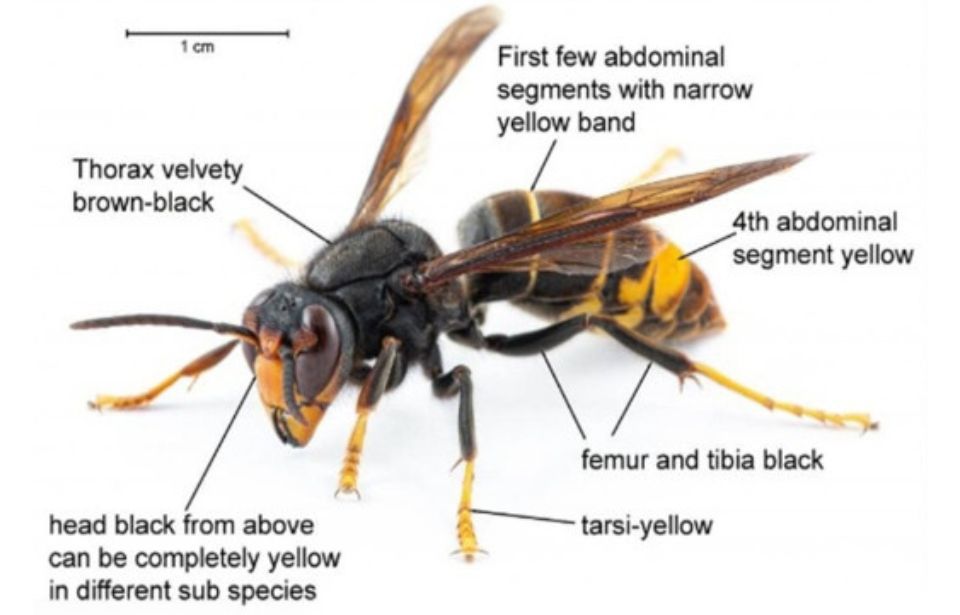
Identification guide on spotting a yellow legged hornet. Image: Supplied
“A destroyed nest was found right next to where kids play," Brown says.
The public can be a vital tool in the efforts to eradicate hornets.
If residents see a yellow legged hornet, they should place wasp traps in their gardens and report any potential sightings to Biosecurity New Zealand.
Brown says killing or trapping the hornets is not a good idea because tracing them back to the nest is essential for full eradication.
-----
Our journalists sometimes use AI tools which are checked by humans for accuracy.
AI was used to transcribe audio from the interview and for research.



Entrepreneurial platform for migrant women hopes to help change negative narratives
Keesha Levesque • June 8, 2026
Entrepreneurial platform for migrant women hopes to help change negative narratives
Keesha Levesque • June 8, 2026