Entrepreneurial platform for migrant women hopes to help change negative narratives
• June 8, 2026
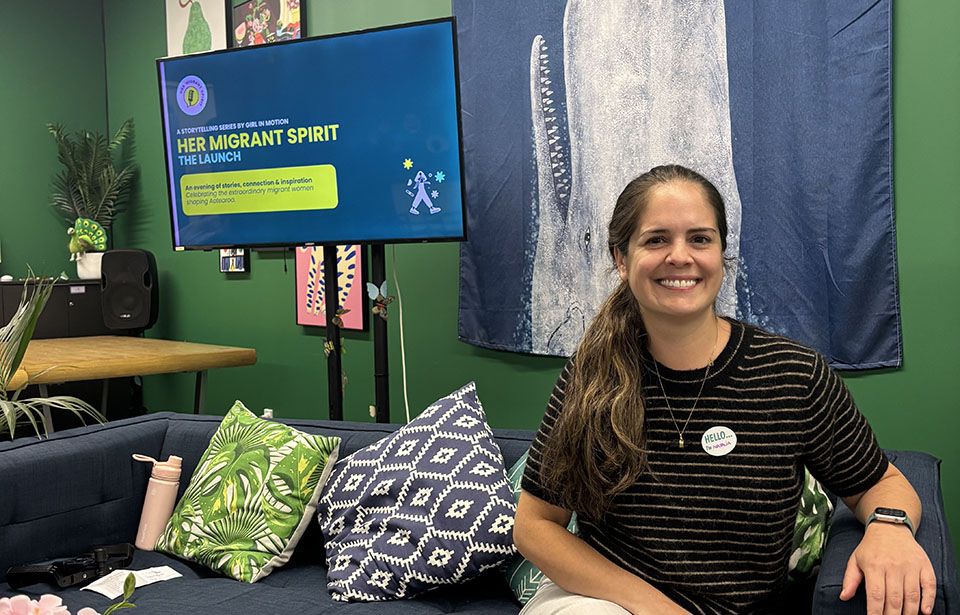
Natalia Garcia, founder of Girl in Motion, migrated to Aotearoa from Argentina over 20 years ago. Photo: Supplied.
Girl in Motion, a social enterprise for entrepreneurial migrant women in Aotearoa, is launching a free online learning platform in August.
The platform will provide micro-learning courses to help migrant women start their own businesses.
According to founder Natalia Garcia, Girl in Motion is still in the planning stage and actively seeking sponsors.
“I think there’s a big need for a platform like this, but it’s just a matter of getting the right support to make this available for the pilot first, and then to as many women as possible after that,” says Garcia.
“[Girl in Motion] gives women the first steps that they need to follow to get their business up and running."
An advisory council will help to shape the platform, which will be based on three pillars: learning, community and inspiration.
The community and inspiration pillars were recently launched through the storytelling series Her Migrant Spirit (HMS), a weekly digital storytelling series featuring conversations with local migrant women entrepreneurs.
Around 50 women celebrated the launch at Academy Ex featuring a panel discussion with Dani Paim, Cyril Eltanal and Neelu Taore.
All three women were immigrants who came to Aotearoa and began their own businesses.
Paim, a property investment coach, teaches women how to invest in local real estate.
Meanwhile, Taore shows women how to invest in themselves. She’s the director of Avana Cosmetic and Laser Clinics, which won the 2025 Business Excellence in Retail Trade award.
Eltanal co-owns LME Power, an electrical contracting company.
The panel speakers talked about their own journeys navigating entrepreneurship and the barriers they faced, including how to overcome isolation, cultural shifts and navigating male-dominated landscapes.
In April, a new report highlighted minority ethnic groups' contributions to Auckland’s economy. It revealed that $50 billion of Auckland’s annual GDP can be attributed to ethnic minorities.
Despite this, ethnic women earned 16.4 per cent less per hour than European men in the labour force.
A separate report found funding, financial barriers, systemic bias, representation, peer support, mentorship and cultural barriers as the common challenges.
The report profiled 16 ethnic entrepreneurial women across the country and highlighted how many of them were funded on proven results over future potential, causing them to pull funds from personal savings.
Maria Jimenez, a licensed immigration advisor, says events such as HMS are important for connection and growth.
She noted many migrants are unfamiliar with the local market, which, to her, relies on networking more than advertising campaigns.
“[Migrant women] need to know that they’re not alone, and that whatever they’re going through, one of us [is] also experiencing,” says Jimenez.
She suggested HMS could include training and seminar sessions about business to help educate migrant women about available resources.
Future series episodes will be shared through podcasts, social media reels and blog posts.
--
Our journalists sometimes use AI tools which are checked by humans for accuracy.
AI was used to transcribe audio from the interview.

Entrepreneurial platform for migrant women hopes to help change negative narratives
Keesha Levesque • June 8, 2026
Entrepreneurial platform for migrant women hopes to help change negative narratives
Keesha Levesque • June 8, 2026