Funding change for midwives sees vaccination numbers climb
• June 8, 2026
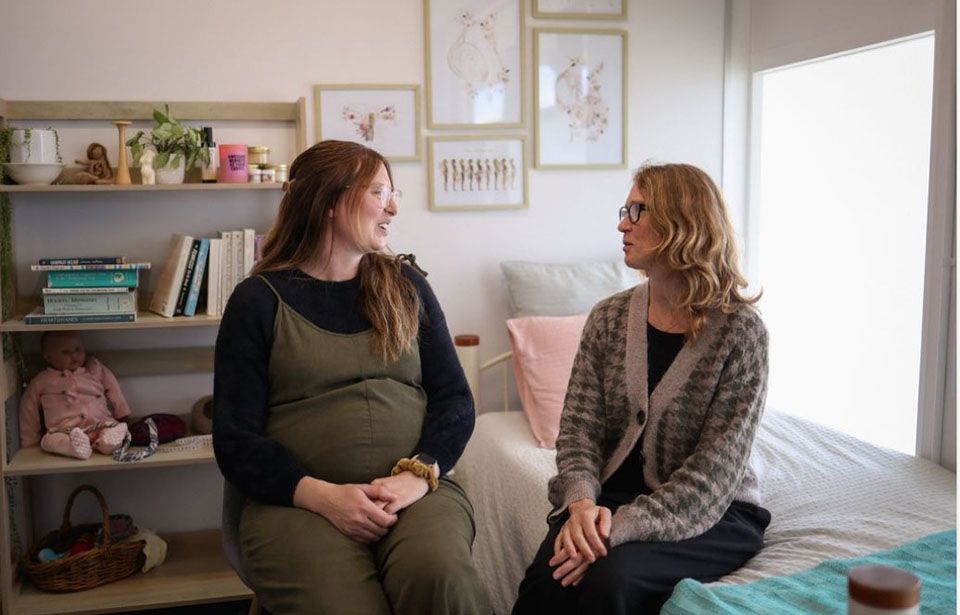
An initiative from Health NZ now pays Kiwi midwives administration fees and supplies proper equipment. Photo supplied by Health NZ.
Health NZ’s Enabling Midwives Project, an initiative to increase prenatal and antenatal immunisations across Aotearoa, has seen rising vaccination rates.
According to data from Health NZ, more than 400 vaccines were administered in April, a stark increase from the 50 administered in December 2025.
The initiative, which launched in February, extends midwives’ ability to administer vaccines.
While they had previously been able to deliver immunisations, Kiwi midwives weren’t paid administration fees and didn’t have access to proper equipment for delivery and storage.
Pregnant women, infants under 12 months and household members are all eligible.
Vaccinations can include measles, mumps and rubella (MMR), pertussis and the flu.
Christine McIntosh, the clinical director of Prevention Immunisation with Health NZ, says that the programme aims to make immunisations more accessible and improve rates.
“In Enabling Midwives, any midwife can do the training, but there has been a real focus around those communities where it can be more difficult to access an antenatal vaccination,” says McIntosh.
More than 40 midwives have begun vaccinating, and almost 200 midwives have registered their interest in offering immunisations.
The programme has vaccinated more than 700 people, with more than half being New Zealand European and a fifth Māori.
Since February 2024, pertussis coverage has risen across New Zealand European, Māori and Pasifika communities.
However, the most notable increases have been found in the Māori community, with coverage rising from 28 per cent to 35 per cent.
According to a 2022 article from the National Library of Medicine, maternal vaccination status in New Zealand was sub-optimal.
The article highlighted that the lack of culturally appropriate antenatal engagement and care are contributing factors to health inequities for pregnant Māori and Pasifika women.
“For vaccinating workforces, there is a lot of work going on around how we develop that trust and confidence in relationships that we have with whānau around those conversations that we have around vaccination,” says McIntosh.
Distrust of Western medicine practices, such as vaccination, has been a dividing factor in Māori communities for many reasons.
A report from the Auckland University of Technology (AUT) discussed health providers who shamed, disrespected and disregarded Māori mothers during visits.
“The procedural nature of immunisations, rather than a genuine check-in and opportunity to connect with [Māori mothers] and their tamariki, was viewed as problematic," the report said.
Kelly Waiana Tikao, the founder of Hākui, an online resource for whānau to learn about Kai Tahu customary birthing practices, says there’s more to the low immunisation rates for Māori communities than a lack of interest.
Tikao, who has previously worked as a public health nurse, says building trust in relationships and looking at vaccinations through a Māori perspective are key to informed decision-making.
“There are some wonderful people out there in our nursing and midwifery [industries] that are trying to create these relationships first before the introduction of vaccinations.
“Because once you understand the context, you understand why there might be pushback,” says Tikao.
While she doesn’t take a set stance on vaccination, she notes how choice and reasoning about it are specific to everyone.
“If you give people options and you give them information with those options and you give them time and you give them a really lovely safe space, then generally the decision they make is the right one for them at that time."
In the northern region, toolkits for conversations around vaccines have been developed.
McIntosh says there’s wānanga between healthcare providers to provide training on developing trust and building it effectively.
Building effective trust is an important facet of healthcare training and “[providers] are very mindful of that trust we need to build and also cultural sensitivity to people of different cultures", she says.
--
Our journalists sometimes use AI tools which are checked by humans for accuracy.
AI was used to transcribe audio from the interview.
Entrepreneurial platform for migrant women hopes to help change negative narratives
Keesha Levesque • June 8, 2026
Entrepreneurial platform for migrant women hopes to help change negative narratives
Keesha Levesque • June 8, 2026